Proper lubricant, appropriate quantity, timely lubrication, and correct lubrication points: Centralized automated lubrication systems effectively improve machine availability while reducing reliance on scarce personnel. These systems deliver the right amount of lubricant at the correct intervals, minimizing friction and wear and extending the lifespan of bearings and machinery.
Automatic lubrication systems are designed for individual machines or complete systems, like Machine tools, automation, road/construction machinery, construction, agriculture and forestry equipment, mining and cement industry, food and beverage, railway applications, steel industry, pulp and paper industry, wind energy… With providing precise replenishment of the correct amount of lubricant to all required lubrication points, comprehensively optimizing the lubrication process.

So if you or your factory choose the automated lubrication system, there're 10 factors you may consider.
● Significantly reduced maintenance and spare parts costs
Traditional manual lubrication often suffers from insufficient lubrication, over-lubrication, lubrication leaks, and inconsistent lubrication cycles. These issues can easily lead to dry friction, abnormal wear, corrosion, and premature damage to core components such as bearings, gears, and guide rails. Automatic lubrication pump systems provide continuous, uniform, and standardized lubrication protection, reducing abnormal equipment wear at its source. This significantly reduces the probability of component wear, aging, and damage, effectively lowering the frequency of equipment maintenance, the number of spare parts replaced, and labor costs, resulting in substantial long-term savings for businesses on equipment maintenance expenses.
● Comprehensively improve equipment operational reliability
Equipment lifespan and operational stability are highly dependent on lubrication quality. Manual lubrication is greatly affected by human factors such as personnel experience, sense of responsibility, shift handover, and workload, resulting in unstable lubrication quality. Automatic lubrication systems pre-set precise lubrication cycles and dosages according to equipment operating conditions, ensuring that friction pairs are always in optimal lubrication condition. This avoids problems such as dry friction, high temperatures, abnormal noise, and vibration, significantly improving the overall operational stability, continuity, and durability of the equipment, and reducing the risk of hidden equipment failures.
● Precise, timed, and quantitative lubrication, saving up to 50% on lubricant costs
Manual lubrication often results in waste due to overfilling, haphazard application, and repeated application. Large amounts of grease/oil overflow, spill, or deteriorate due to excessive application. Automatic lubrication systems precisely control lubrication time, oil output, and supply frequency, replenishing only the required amount and preventing overfilling. This completely avoids grease waste and can directly achieve up to 50% savings in lubricant consumable costs compared to traditional manual lubrication, significantly reducing daily consumable procurement costs.
● Effectively reduce equipment downtime and production losses
Most unplanned shutdowns and equipment malfunctions are caused by wear, jamming, overheating, and abnormal noise due to poor lubrication. Downtime not only interrupts production capacity but also leads to a chain reaction of losses, including production delays, order backlogs, rework losses, and idle labor. Automatic lubrication systems, through standardized lubrication around the clock, significantly reduce the probability of equipment failure, decrease the frequency of sudden and maintenance shutdowns, ensure continuous and stable production, and greatly reduce the hidden production losses caused by downtime.
● Mitigating Environmental Impact
Automatic lubrication systems provide metered oil supply, reducing grease overflow at the source; the entire piping system boasts excellent sealing performance, with virtually no leakage; optional waste oil collection components allow for the centralized collection and treatment of excess grease, reducing oily waste emissions. Grease utilization is significantly improved, reducing lubricating grease consumption and carbon emissions from grease production and transportation, helping companies meet the environmental requirements of green factories and ISO 14001 environmental management systems, and reducing environmentally related expenditures for oil spill cleanup and hazardous waste treatment.
● Higher operator safety
Automatic lubrication relies on high-pressure pipelines to deliver lubricating media over long distances, and the entire process of greasing is completed automatically without the need for personnel to approach the operating equipment. The system is equipped with protection against abnormal pressure, leakage, and blockage. In case of failure, it automatically releases pressure and shuts down, preventing high-pressure grease spray from causing injury. It significantly reduces the number of personnel entering high-risk work areas, lowers the probability of safety accidents such as mechanical injuries, working at heights, and high-temperature burns, and complies with safety production standards.
● The automatic lubrication system is easily expandable
Adopting a modular design, the basic lubrication unit can be freely added later. The addition of metering devices, extension of delivery pipelines, and expansion of oil storage tanks are required to simultaneously expand the number of lubrication points. The system supports functional expansion, allowing the addition of intelligent modules such as liquid level monitoring, remote communication, PLC linkage, oil volume statistics, and oil leakage alarms. This adapts to the company's continuously expanding production capacity needs, and the initial equipment investment can be reused for a long time, eliminating the need for repeated purchases.
● Easy to understand, install, and maintain
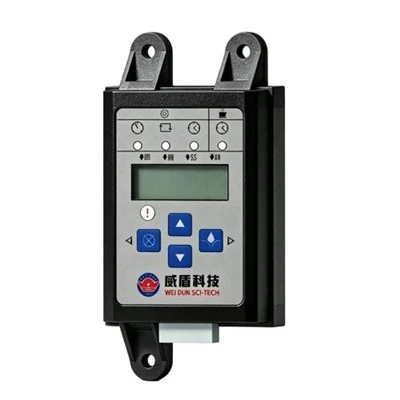
Operation is straightforward, with clear graphic and textual labels on the control system panel. Installation is simple, employing standardized modular components. Universal standard grease pumps, distributors, pipelines, joints and other parts, compatible with various machine tools, production lines, construction machinery, mining equipment, and other types of machines. Maintenance is simple, consumable parts are easy to disassemble and assemble, minimizing maintenance time and reducing labor costs.
● Can pump over long distances and in a very wide temperature range
The automatic lubrication system is also suitable for long-distance pumping operations, and the span of the delivery line is not limited by a large space. At the same time, it can withstand extreme cold to high temperature ranges. It is not easy to solidify at low temperatures and not easy to deteriorate at high temperatures. The pumping is smooth and stable under the temperature fluctuation of the working conditions, and it is suitable for complex outdoor and industrial scenarios.
● Stable and reliable operation
The system features multiple fault-tolerant designs: automatic low oil level alert to prevent dry running without oil; automatic pressure relief to protect the pump body from pump blockage and prevent motor burnout; automatic restoration of preset lubrication cycles after power failure and restart, eliminating the need for manual resetting. Components have long service life and a low failure rate, reducing production losses from sudden downtime. Long-term overall maintenance costs are lower, making it suitable for companies with uninterrupted continuous production.
● The system is easy to expand
The system adopts a modular design, allowing for flexible upgrades to both hardware and functions. The initially purchased main unit can be reused long-term without requiring a complete replacement: lubrication point expansion, intelligent function expansion, and refined zone control.

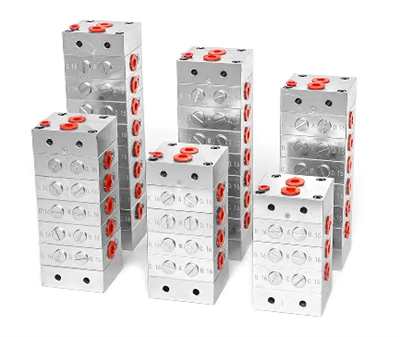
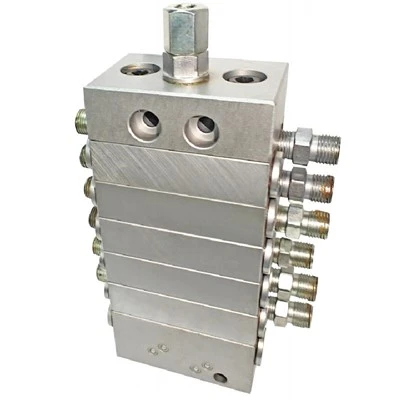
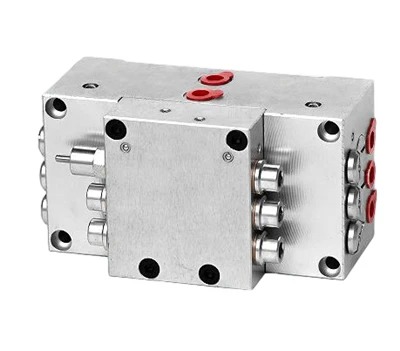
WEIDUN's Dual-line Automatic Lubrication System mainly consists of a lubrication pump, a motor change-over valve, pipelines, a distributor, and a controller. The motor change-over valve switches between the supply and pressure relief of the two main grease circuits, A and B. Alternating grease pressure changes drive the distributor piston in a reciprocating motion, achieving metered grease injection. After lubrication of a single circuit is completed, the pipeline pressure reaches the set value. The end differential pressure switch sends a signal, and the control system automatically switches the grease circuit, completing the lubrication cycle.

The automatic lubrication system main equip with
WDS-ǁ electric lubrication pump
VDZ electric lubrication pump
VDR electric lubrication pump
VDS electric lubrication pump
VDS-Y hydraulic lubrication pump
Dual-line metering devices
Pressure switches
Filters
Controller
Pressure gauges
Hoses and fittings
…