On the afternoon of January 31, 2000, an MD-83 aircraft took off from Puerto Vallarta International Airport in Mexico. During the cruise phase, the horizontal stabilizer malfunctioned, causing the aircraft to nose-down and forcing it to plunge rapidly. The aircraft eventually crashed in the Pacific Ocean, 4.3 kilometers north of Annacapa Island, California. All two pilots, three flight attendants, and 83 passengers (including three children) on board perished.

Analysis of the recovered aircraft wreckage revealed the following:
• Approximately 90% of the threads on the top nut were worn away, eventually causing the entire nut to detach completely.
• The recovered bolts lacked lubrication, with no oil residue found.
Analysis showed that approximately 90% of the nuts' threads were worn, and the entire nut detached completely during the crash. The horizontal stabilizer was rendered ineffective by the airflow. Furthermore, the NTSB found that the wear rate of the nut's threads was significantly higher than average. The NTSB ultimately determined that the lack of lubricant and the resulting extreme wear on the nut were the direct causes of the accident.

According to statistics from the U.S. Department of Energy, poor lubrication accounts for up to 40% of bearing failures, increasing repair costs by 2-3 times. The root causes are often simple. For example, in a freight train derailment, investigations revealed that an overheated bearing in the axle box caused the axle to break, resulting in the train overturning, traffic disruption for several hours, and enormous losses. Bearing Failure Damage Root Cause Analysis: Bearings are core components of most equipment. Once a bearing fails, the equipment stops. Finding the root cause to prevent recurrence is crucial. In fact, once a bearing is damaged, it gradually deteriorates until it becomes unusable; by then, all evidence of the failure may have been destroyed.
A World Bank report indicates that energy waste due to lubrication problems accounts for 3%-5% of total energy consumption in global industry, equivalent to a loss of approximately 120 million tons of standard coal equivalent annually. International authoritative organizations estimate that 30%-50% of global energy consumption is due to friction and wear, with poor lubrication causing over 60% of material wear. Furthermore, over 50% of serious mechanical equipment accidents stem from excessive wear caused by lubrication failure. Adopting advanced lubrication technologies can reduce friction and wear, decrease the occurrence of serious mechanical equipment accidents, thereby achieving direct energy savings, creating value for all links in the industrial chain, and improving economic efficiency.
The problem of lubrication system failure is prominent in the current industrial sector, and has become a key bottleneck restricting equipment reliability and production efficiency. Data from the International Labour Organization (ILO) shows that mechanical accidents caused by lubrication failure account for 22% of industrial safety accidents, and can easily lead to high-temperature fires or component breakage.
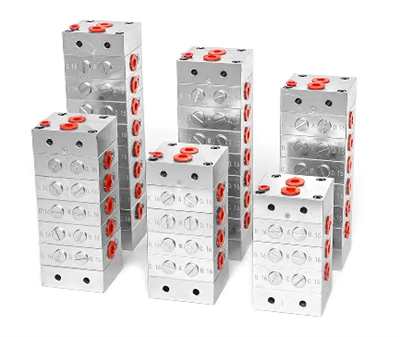
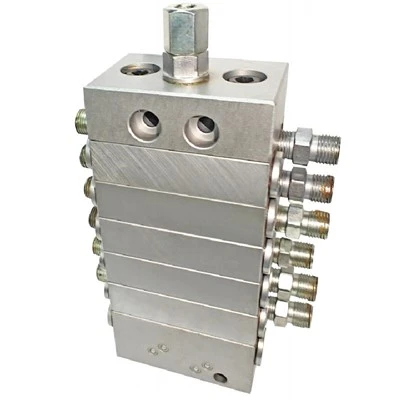
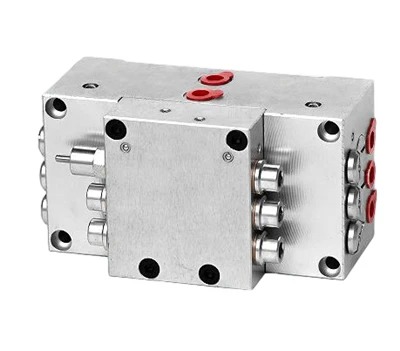
Therefore, choosing the right lubrication system for your equipment is crucial. Centralized grease lubrication system is a method that uses a specific system to supply lubricating oil or grease to all lubrication points on the equipment. This system typically consists of a lubrication pump, reservoir, distributor, pipelines, and control devices. It can automatically and precisely supply lubricant to multiple lubrication points in a timely and quantitative manner according to the equipment's operating conditions and lubrication needs, achieving auto lubrication, efficient and reliable lubrication.

The core advantages of a centralized grease lubrication system:
Automated control: Timed and metered lubrication reduces workload and significantly improves accuracy compared to manual lubrication.
Multi-point synchronous lubrication: Centralized lubrication improves equipment efficiency.
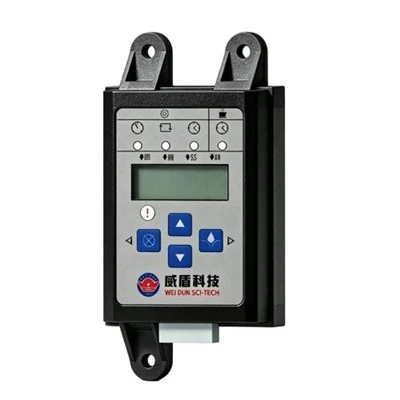
Intelligent monitoring: Real-time monitoring provides early warning of lubrication anomalies, improving response speed.
Reduced maintenance costs: Reduces the total cost of ownership (CCO) and extends equipment lifespan.
Centralized grease lubrication has significant advantages over traditional manual lubrication. It can accurately control the amount of oil, achieve uniform and timed grease supply to multiple lubrication points, and ensure the lubrication effect; Through automated operation, it greatly saves labor and time, and reduces downtime; It can also monitor faults in real time and provide early warning; It reduces the probability of operators being exposed to dangers and is safer in special environments; It also reduces lubricating oil waste and pollution, saving energy and environmental protection.
WEIDUN lubrication pumps that can be configured with dual lubrication systems include:
WDS-ǁ Electric Lubrication Pump, applicable to 0# - 2# lithium-based grease.
VDZ Electric Lubrication Pump, applicable to 0# - 3# lithium-based grease.
VDR Electric Lubrication Pump, applicable to 0# - 3# lithium-based grease.
VDS Electric Lubrication Pump, applicable to 0# - 2# lithium-based grease.
VDS-Y Electric Lubrication Pump, applicable to 0# - 2# lithium-based grease.

Equipped with accessories: Differential Pressure Switch, Dual-Line Change-over Valve, Dual-Line Distributor, Filter, Lubrication Controller, Lubrication Control Box, Pressure Switch, Pressure Gauge, Various Hoses and Fittings…
Centralized Grease Lubrication System is widely used in wind energy, forging/ pressing, construction machinery, rubber and plastic, assembly lines, agricultural and forestry machinery, machine tool automation, metallurgical industry, mining machinery, cement and building materials, port equipment, forging machinery, power stations, rail transit, conveyor belts, overhead cranes...

WEIDUN's centralized grease lubrication system helps solve lubrication problems during equipment operation, eliminating the need for manual operation and ensuring proper lubrication at every point, thus relieving your worries!
Key words: Centralized Grease Lubrication System
Auto Lubrication
Electric Lubrication Pump