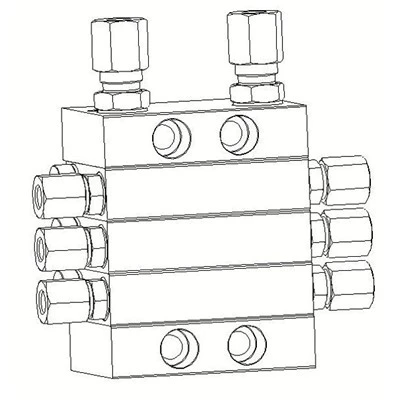
The working principle of a single-line distributor is to receive an input signal and copy it to multiple output ports so that multiple devices or systems can receive the same signal at the same time. The specific process is as follows:
Input signal reception: The input signal is usually input into the single-line distributor through one or more input ports. These input ports can be physical interfaces (such as jacks) or logical interfaces (such as network connections).
Signal replication: After the input signal reaches the single-line distributor, it is copied to multiple output ports by internal circuits. This usually involves using electronic components such as amplifiers, buffers, or switches to copy the signal.
Output signal distribution: The copied signal is distributed to different devices or systems through each output port. Each output port can be connected to an independent target device to receive the same signal at the same time.
Signal quality maintenance: Single-line distributors usually take measures to ensure that the quality of the output signal is not lost. This may include using amplifiers to enhance signal strength, using filters to reduce noise interference, etc.
Application scenarios of single-line distributors include audio, video and data transmission systems, as they can effectively distribute signals to multiple devices or systems simultaneously without processing or modifying the input signal.